Diary
The day by clinician and by room. Book, move, mark arrived, work through and close. Slot search answers "when can you see me" without anyone scrolling a calendar.
Practice software for clinics that also do house calls. Book the day, write the notes, dispense from the shelf, bill the drive, and close the till — in one place, on the same record the owner already keeps.
Works for walk-ins who have never heard of the app · Single site or several
Double-booking refused by the database, not by a warning
Signed consultations, corrected by addendum
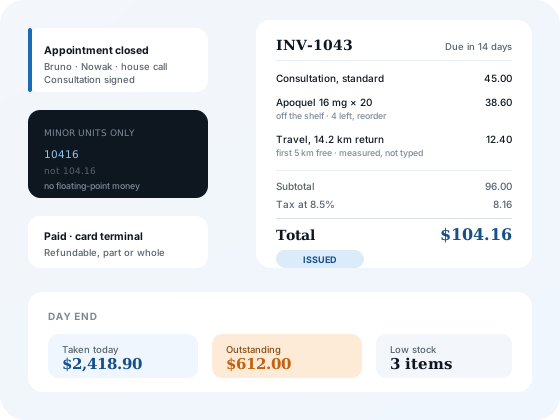
Money in whole cents. No floating point anywhere near an invoice
What you get
The practice module is five tabs. Each one is the thing you would open to do the job it is named after.
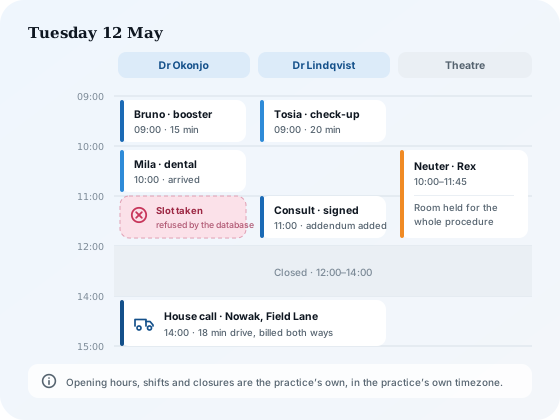
The day by clinician and by room. Book, move, mark arrived, work through and close. Slot search answers "when can you see me" without anyone scrolling a calendar.
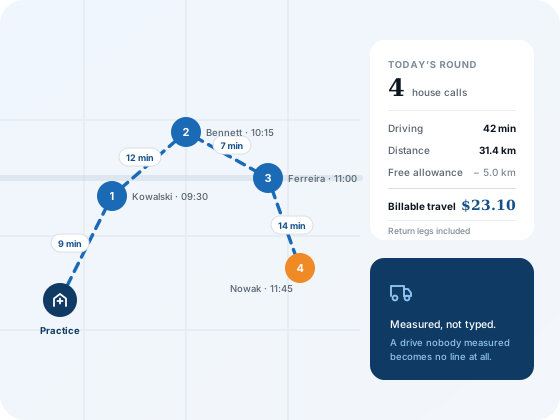
House calls in driving order, with real travel times between them. Plan the round, then bill the drive on the rules you set.
Your clients and their patients, with the chart: history, vaccinations, prescriptions and weights. Your records, whether or not the owner uses the app.
Invoice straight from a finished appointment. Catalogue and stock, tax, payments, refunds, and the day-end figure that has to match the drawer.
Staff and their roles, rooms, sites, appointment types, opening hours, closures and the rota. Your tax rate, invoice numbering and payment terms.
Every practice patient can be linked to the owner’s own PetHealth Pro record — so what you write reaches the person who has to give the tablets at eight o’clock.
The diary
Not "should not" — cannot. Overlaps are refused by an exclusion constraint in the database, so a race between the phone and the front desk ends in a polite "that slot has gone" instead of two clients in one chair.
The till
Close a consultation and raise the invoice from it. The consult fee, anything dispensed, and the drive if you bill for it — then tax, total, payment, and a day-end figure you can hold against the drawer.
The chart
A consultation is signed. After that it is not edited — it takes an addendum, which is dated and attributed. That is the version of events that survives a complaint eighteen months later.
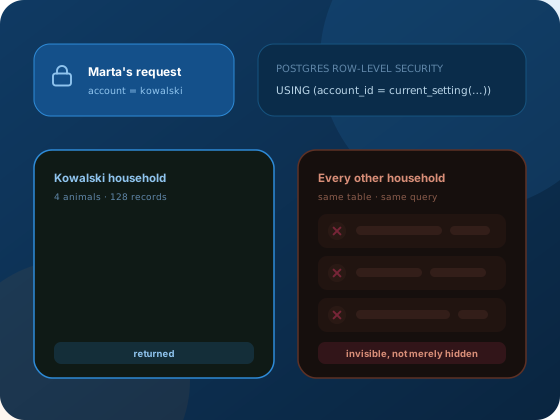
Most of a practice’s patients will never use the app. Clients and patients are your own records, and nothing requires the owner to sign up for anything.
If the owner keeps a PetHealth Pro record, their animal links to your patient. One animal, two views of it, and no retyping between them.
Written from the consultation as you go, so the chart is complete before the next client is in the room.
Staff & separation
Staff are vets, nurses, technicians, receptionists or managers, and what each can do is a set of capabilities rather than a rank. Costs in particular are their own permission.
Before you ask
No, and most will not. The practice keeps its own client and patient records, and a walk-in with a cat in a box is a normal patient. The link to an owner’s own record is optional on every patient — useful when it is there, never required.
Yes. Sites, rooms and staff are all practice-level, so a second branch is another site rather than another subscription to reconcile.
That is what the Round tab is for. It plans the day’s calls in driving order using real travel times, and the drive can be billed per kilometre, per minute, as a flat fee, or not at all — with a free allowance and return legs if you want them. A measured drive becomes a line on the invoice; an unmeasured one becomes nothing, rather than a zero-value line nobody can explain.
You add an addendum, which is dated and attributed. The original stays. This is deliberate: notes that can be quietly rewritten are worth very little if anyone ever disputes what happened.
Practice pricing depends on how many clinicians and sites you run, so we would rather work it out with you than print a number that is wrong for most practices. Write to clinics@thinkpethealth.com and tell us roughly the size of the practice.
Yes, on the same terms as everyone else: a full export of your records whenever you want one, at no charge. Your clinical records are yours, and we are not going to hold them to keep you.
Tell us how your practice actually runs — the branches, the rota, the house calls, the awkward bit — and we will show you whether this fits.